
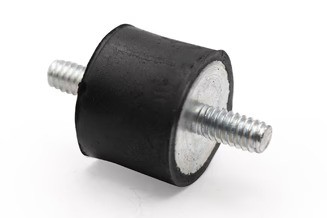
Integrating a professional vibration mount into industrial systems is a technical requirement for maintaining the accuracy and longevity of sensitive hardware. Mechanical oscillations, if left unmanaged, can lead to accelerated component wear, structural fatigue, and significant noise pollution within a facility. By utilizing specialized hardware to decouple machinery from its mounting surface, engineers can effectively absorb kinetic energy and prevent it from transferring to the surrounding environment. This process is essential for high-precision manufacturing, laboratory settings, and heavy-duty power generation where stability is a primary metric for operational success.
Key Technical Features of a Vibration Mount for Precision Engineering
The effectiveness of a vibration mount is determined by its ability to manage the relationship between natural frequency and disturbing frequency. A well-engineered mount acts as a low-pass filter, allowing low-frequency movements while blocking higher-frequency vibrations that cause damage. The selection process involves analyzing the static load, the dynamic forces at play, and the environmental conditions where the equipment will operate..
Static and Dynamic Load Capacity
Every mount has a specific load rating that must be respected to ensure optimal performance. The static load refers to the constant weight of the machine, while the dynamic load accounts for the forces generated during operation. If a mount is overloaded, the material loses its elasticity, resulting in “bottoming out” where the vibration is transferred directly through the hardware. Conversely, an underloaded mount may be too stiff to provide any meaningful attenuation.
Calculating the Transmissibility Ratio
Transmissibility is the measure of how much vibration is transferred through the mount to the support structure. Engineers aim for a transmissibility ratio of less than one, meaning the output vibration is significantly lower than the input. This is achieved by ensuring the disturbing frequency of the machine is at least 1.4 times higher than the natural frequency of the mounting system.
Material Damping and Energy Dissipation
Damping is the mechanism that dissipates energy within the mount, preventing the system from vibrating excessively at its natural frequency. Without sufficient damping, a machine could experience violent oscillations during startup or shutdown as it passes through the resonance phase. High-quality industrial mounts utilize materials that convert kinetic energy into a small amount of heat, which is then dissipated safely.
Understanding Material Composition in Isolation Rubber Mounts
The performance of isolation rubber mounts depends heavily on the chemical composition and hardness of the elastomer used. Rubber is a preferred material because it can be molded into complex shapes and offers excellent energy absorption properties. Manufacturers use different Shore A hardness ratings to categorize the stiffness of these components, allowing for precise matching with specific industrial requirements.
Natural Rubber vs Synthetic Elastomers
The choice between natural and synthetic materials depends on the operating environment. Natural rubber provides superior resilience and low-temperature flexibility, making it ideal for general-purpose applications. However, in environments where oil, fuel, or extreme heat are present, synthetic elastomers like Neoprene or Nitrile are required to prevent material degradation.
Shore A Hardness and Durometer Selection
Durometer is a measurement of the material’s resistance to indentation. A lower durometer indicates a softer, more compliant mount that provides better isolation for lightweight, high-frequency equipment. A higher durometer indicates a stiffer material suitable for heavy machinery that generates high-amplitude, low-frequency vibrations.
Bonding Strength and Metal Interleafs
In many isolation rubber mounts, the elastomer is bonded to metal plates or studs. This bonding must be chemically and mechanically sound to prevent separation under shear or tensile loads. Some advanced designs incorporate internal metal interleafs, which increase the vertical stiffness while maintaining lateral flexibility, allowing for better control of multidirectional forces.
The Role of Isolation Mounts in Structural Integrity
The use of isolation mounts is not limited to protecting the machine itself, it is also about protecting the building and surrounding infrastructure. Large industrial equipment can send vibrations through concrete floors and steel beams, potentially affecting the structural integrity of the facility over time. Decoupling these machines ensures that the energy remains localized and controlled.
Preventing Resonant Frequencies in Buildings
Every structure has a natural frequency. If a machine operates at a speed that matches the natural frequency of the floor or a support beam, resonance occurs. This can lead to visible swaying, loud structural noise, and even structural failure in extreme cases. Professional mounting solutions shift the natural frequency of the system away from the building’s sensitive ranges.
Noise Reduction and Acoustic Isolation
Vibrations are essentially low-frequency sound waves traveling through solid objects. When these vibrations reach large surfaces like walls or ceilings, they act as speakers, amplifying the noise. By using isolation mounts, the “structure-borne” noise is eliminated at the source, creating a much quieter and more productive work environment.
Impact Protection for Sensitive Lab Equipment
In laboratory environments, even microscopic vibrations can ruin an experiment or lead to inaccurate data. Optical tables, electron microscopes, and high-precision scales require a stable base that is isolated from the footsteps of personnel or the operation of HVAC systems elsewhere in the building.
Critical Damping for Precision Measurement
- Active Isolation: Uses sensors and actuators to counter vibrations in real-time.
- Passive Isolation: Relies on the physical properties of the mount to absorb energy.
- Pneumatic Systems: Uses air pressure to provide ultra-low natural frequencies for sensitive optics.
Environmental Resistance and Lifecycle Management
Industrial environments are often harsh, requiring isolation rubber mounts that can survive exposure to various contaminants and temperature fluctuations. The lifecycle of a mount is determined by how well it resists these external factors while maintaining its elastic properties.
Chemical and Oil Resistance in Manufacturing
In machining centers or automotive plants, equipment is often covered in cutting fluids, lubricants, and cleaners. Standard rubber will swell and soften when exposed to these chemicals, leading to a failure of the isolation system. Utilizing Nitrile or Viton components ensures that the mounts remain functional even in the presence of aggressive industrial fluids.
Temperature Stability and Thermal Aging
Extreme temperatures can alter the stiffness of an elastomer. High heat can lead to thermal aging, where the rubber becomes brittle and cracks. Conversely, extreme cold can cause the material to reach its “glass transition” point, where it becomes rigid and loses its ability to isolate vibration. Engineering-grade mounts are tested to remain within their performance specifications across wide temperature ranges.
UV and Ozone Protection for Outdoor Units
HVAC units and generators located on rooftops are subject to constant UV radiation and ozone exposure. These factors cause “weather checking” or small cracks on the surface of the rubber. Advanced outdoor isolation mounts include inhibitors in the elastomer compound to prevent this degradation, ensuring a long service life in all weather conditions.
| Material Type | Best Application | Temperature Range |
| Natural Rubber | General machinery and engines | -50°C to 70°C |
| Neoprene | Outdoor HVAC and refrigeration | -40°C to 100°C |
| Nitrile (Buna-N) | Fuel and oil handling systems | -30°C to 120°C |
| Silicone | Food grade and high heat labs | -60°C to 200°C |
Selecting the correct vibration mount is a technical process that requires a clear understanding of physics and material science. By prioritizing proper material selection, accurate load calculation, and disciplined installation, businesses can protect their investments and ensure a stable, quiet, and efficient production environment.