
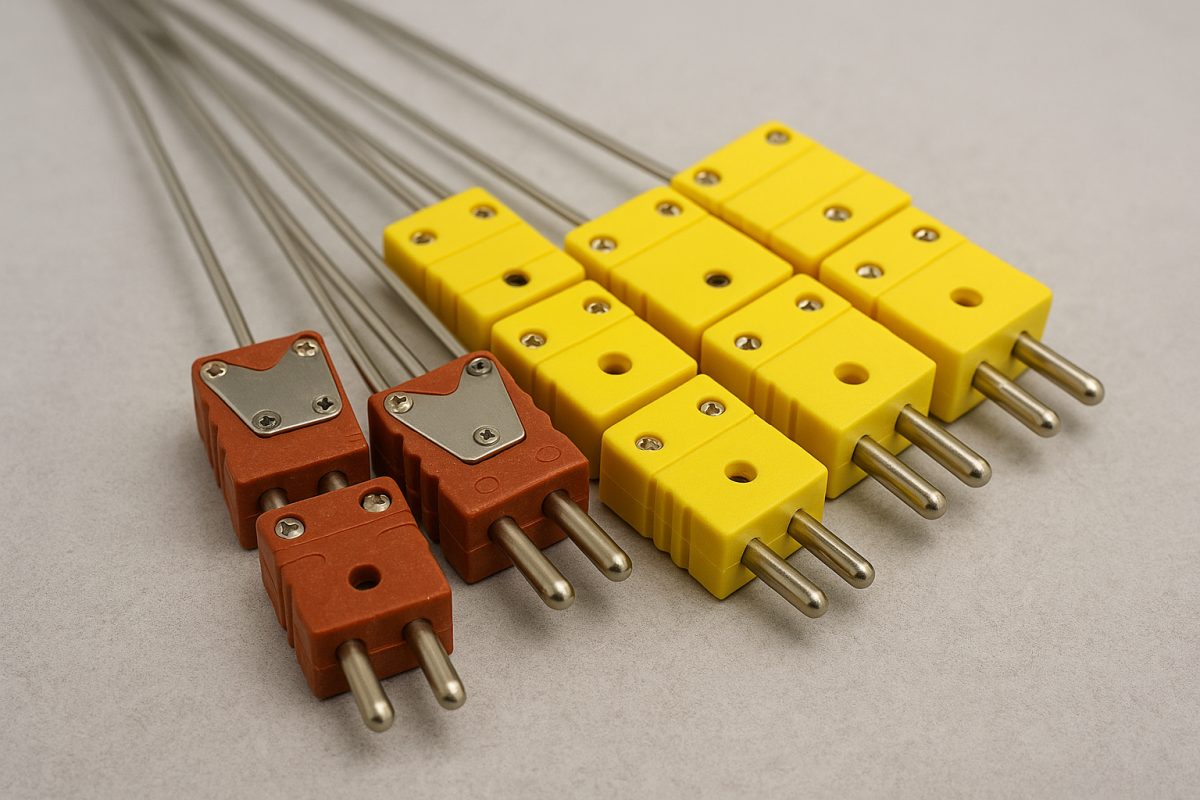
High-temperature industrial processing requires robust thermal sensors that resist extreme thermal stress, mechanical shock, and chemical exposure. Installing a mineral-insulated thermocouple protects sensitive measuring conductors inside a dense ceramic matrix, ensuring reliable temperature tracking across critical heating applications. By shielding internal alloys within a continuous metal sheath, insulated thermocouples eliminate the drift and insulation breakdown commonly seen in conventional plastic or fiberglass sensor assemblies.
How Mineral Insulated Thermocouple Tech Prevents Sensor Failure
Standard flexible thermocouple wires deteriorate rapidly when exposed to high ambient temperatures, corrosive fumes, or sharp physical impacts. A mineral insulated thermocouple solves these vulnerabilities by enclosing thermocouple conductor wires within a rigid, seamless metal tube filled with highly compacted Magnesium Oxide (MgO) powder. This solid-state construction isolates internal thermoelements from external contamination while providing superior structural integrity.
The compacted insulation inside an MgO thermocouple holds internal conductors firmly in place, preventing short circuits caused by heavy machine vibration or thermal expansion. Because the MgO core contains virtually no air pockets, these insulated thermocouples display exceptional resistance to moisture ingress, high pressure, and rapid thermal cycling.
Key Architectural Advantages of MgO Thermocouples
Understanding how mineral-insulated construction improves sensor reliability helps engineers select appropriate thermal hardware for demanding environments.
- Superior Mechanical Flexibility: Despite possessing a solid metal outer sheath, mineral-insulated cable can be bent, twisted, or shaped around obstacles without shorting internal wires or fracturing outer walls.
- Hermetic Pressure Sealing: Compacted MgO powder creates an airtight internal seal that withstands high process pressures in pipelines, pressure vessels, and vacuum furnaces.
- Rapid Thermal Response: Enclosing fine-gauge wires inside high-density MgO powder ensures efficient thermal conductivity from the outer sheath directly to the measuring junction.
- Extended Dielectric Strength: High-purity magnesium oxide maintains high electrical resistance at elevated temperatures, preventing signal noise and voltage leakage to control instruments.
Insulated Thermocouples Selection and Environmental Compatibility
Choosing the proper insulated thermocouples is critical for maximizing sensor longevity. The sheath provides the first line of defense against oxidation, sulfur attack, and chemical corrosion in hot process environments.
Matching Sheath Materials to Process Temperatures
Metal sheaths must maintain mechanical strength and scale resistance at maximum operating temperatures. Selecting an improper alloy leads to premature sheath burnout and internal conductor failure.
| Sheath Material | Maximum Temperature | Primary Corrosion Resistance | Typical Industrial Applications |
| 316 Stainless Steel | 900°C (1650°F) | Excellent resistance to acids and moisture | Food processing, chemical lines, pharmaceutical kilns |
| 310 Stainless Steel | 1100°C (2000°F) | High oxidation resistance in air | Heat treatment furnaces, incinerators, ductwork |
| Inconel 600 | 1150°C (2100°F) | Superior resistance to carburization and chlorine | Petrochemical reactors, furnace retorts, nuclear systems |
| Haynes 230 | 1250°C (2280°F) | Extreme nitriding and oxidation protection | Aerospace combustion chambers, power generation boilers |
Preventing Moisture Contamination in High-Purity MgO
Magnesium oxide powder is naturally hygroscopic, meaning it rapidly absorbs atmospheric moisture if left exposed. Moisture inside an MgO thermocouple drastically reduces insulation resistance, causing electrical leakage, false temperature spikes, and rapid wire corrosion during thermal startup.
Manufacturers apply hermetic epoxy or glass seals at the cold end termination where extension leads exit the sheath. When cutting or terminating mineral-insulated cables in the field, technicians must apply heat to drive off trapped moisture before applying a permanent pot-seal compound.
Measuring Junction Types and Electrical Grounding
The physical connection between internal conductors and the outer sheath determines both response speed and immunity to electrical noise. Selecting the right measuring junction configuration aligns sensor response time with system control needs.
Signal Processing Sequence:
Thermal Input -> MgO Sheath Conduction -> Wire Junction mV Generation -> Cold Junction Compensation -> Transmitter Output
Grounded vs. Ungrounded Mineral Insulated Assemblies
Choosing between grounded and ungrounded junctions impacts measurement accuracy when operating near high-voltage equipment or electric heating elements.
- Grounded Junctions: The conductor wire pair is welded directly into the end cap of the outer metal sheath. This setup provides the fastest thermal response time, making it ideal for monitoring rapid temperature spikes in fluid lines. However, it exposes measurement circuits to ground loops if stray voltage exists on the sheath.
- Ungrounded Junctions: The welded wire junction is fully encased in compacted MgO powder, electrically isolating conductors from the outer sheath wall. This construction resists electrical interference from motors and furnace heaters, preserving clean millivolt signals fed to digital controllers.
Installation Guidelines to Maximize Sensor Service Life
Adhering to proper installation workflows prevents mechanical damage and preserves initial calibration accuracy over years of continuous service.
Step 1: Calculate Bend Radii and Insertion Lengths
When bending mineral insulated cable to clear obstacles, maintain a minimum bend radius equal to 3 to 5 times the outer cable diameter. Sharper bends can displace compacted MgO insulation, allowing internal conductors to touch the outer sheath and cause short circuits.
Ensure insertion depths are at least 10 times the sheath diameter to minimize stem conduction errors. Stem conduction occurs when heat travels away from the sensing tip along the outer metal sheath, causing sensors to read lower than actual stream temperatures.
Step 2: Secure Extension Cable Lead Terminations
Connect the sensor head to extension cabling using matching thermocouple alloy connectors. Maintain correct polarity between positive and negative terminals to avoid creating parasitic thermoelectric junctions that distort process readings.
Step 3: Implement Periodic Insulation Resistance Testing
Monitor internal insulation health using a megohmmeter (megger) set to 500V DC. Measure resistance between internal conductors and the outer metal sheath at room temperature. A healthy assembly should display an insulation resistance exceeding 1,000 megohms. Readings below 100 megohms indicate moisture ingress or insulation degradation, signaling a need for sensor replacement or resealing.
Frequently Asked Questions
What is a mineral insulated thermocouple?
A mineral insulated thermocouple features internal conductor wires embedded inside highly compacted Magnesium Oxide (MgO) powder, protected by a continuous, seamless outer metal sheath.
Why does an MgO thermocouple handle vibration better than standard sensors?
The tightly compacted MgO powder holds internal conductor wires completely rigid inside the outer metal sheath, eliminating physical wire flexing, fatigue, and mechanical shorts caused by process vibration.
Can insulated thermocouples be bent during installation?
Yes, the continuous metal sheath and compacted ceramic core allow insulated thermocouples to be bent and shaped around equipment without cracking outer walls or shorting internal wires.
Integrating mineral insulated thermocouple technology gives processing plants a durable, accurate solution for managing high-temperature environments. By specifying correct sheath alloys, protecting MgO insulation against moisture, and selecting appropriate junction types, facility managers reduce unscheduled downtime, prevent sensor failure, and maintain precise thermal process control across critical operations.