
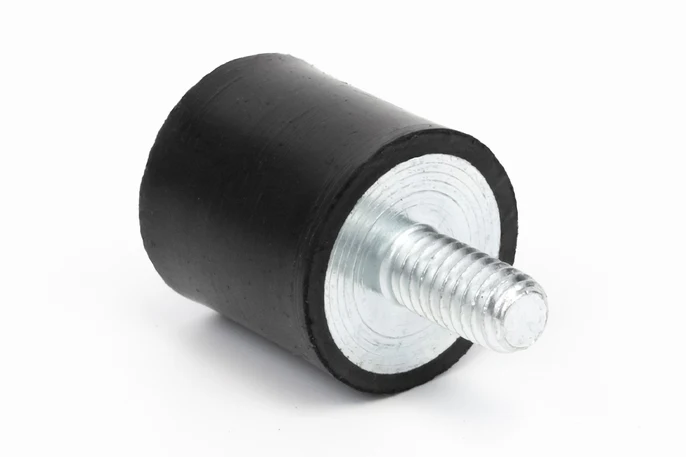
Industrial work environments rely heavily on pressurized air systems to run pneumatic tools and assembly lines, but the constant kinetic energy generated by these machines creates severe operational challenges. Installing durable rubber mounts for air compressor units is the most effective way to isolate these intense physical forces before they travel into the surrounding building structure. Left unmanaged, continuous mechanical resonance degrades internal pistons, loosens electrical connections, and causes heavy metal housings to walk across the facility floor. Investing in high-quality stabilization hardware protects your valuable equipment assets, minimizes costly maintenance interventions, and creates a much safer working environment for your team.
Critical Engineering Factors When Selecting Rubber Mounts for Air Compressor Systems
Choosing the correct isolation component requires a detailed assessment of your machinery’s physical footprint and operating speed. A support that is too rigid will pass high-frequency noise directly into the floor, while an overly soft material will deflect excessively, causing oil misalignment or critical pipe strain. Engineers must balance weight capacity with material density to achieve optimal damping performance.
Calculating Accurate Static Load Distribution
Before purchasing any isolation hardware, you must verify the total operational weight of the compressor, including the pump, motor, tank, and full fluid capacities. This weight must be divided among the mounting points to determine the required load capacity for each individual support. Because weight is rarely distributed evenly between the heavy motor end and the lighter tank end, certain mounting points will naturally require a higher durometer rating to avoid premature material compression.
Identifying the Primary Frequency Disturbances
The rotational speed of the compressor pump dictates the frequency of the mechanical movement that needs to be suppressed. To ensure proper isolation, the natural frequency of the selected rubber supports must be significantly lower than the operating frequency of the machine. Proper frequency targeting prevents the system from entering a state of resonance, which would otherwise amplify the physical movement and cause severe structural stress.
Advanced Protection Through Specialized Air Compressor Vibration Isolators
Integrating heavy-duty air compressor vibration isolators into your equipment setup provides an immediate defense against structural wear and tear. These components are specifically engineered to convert harsh mechanical energy into negligible thermal energy, isolating the machine from the rigid floor.
- Axial and Radial Damping: Manages both downward piston strokes and lateral shifting simultaneously.
- Precision Leveling: Prevents the frame from twisting, which protects internal crankshaft bearings from uneven wear.
- Foundation Decoupling: Stops acoustic energy from using the concrete floor as a massive sounding board.
Maximizing Component Longevity
The internal components of a pressurized air system are highly sensitive to continuous harmonic movement. Valves can seat improperly, pressure switches can fail early, and structural welds along the main tank can develop micro-fractures over time. Utilizing dedicated isolators dampens these internal shocks, ensuring that the machine runs smoothly and reaches its full operational service life without requiring emergency rebuilds.
Finding the Best Anti-Vibration Pads for Air Compressor Installations
For applications where bolt-down style mounts are not ideal, utilizing structured isolation pads offers a flexible and highly efficient alternative. These pads are placed directly beneath the equipment feet to provide an immediate barrier against noise transmission.
Material Configurations for Maximum Suppression
Different shop environments present unique challenges, such as oil mist exposure, high humidity, or extreme temperature fluctuations. Selecting the right pad material ensures that the dampening layer does not dissolve or harden prematurely under harsh factory conditions.
| Pad Type | Core Material | Industrial Benefit | Best Application Environment |
| Waffle Embossed Pads | Natural Elastomer | Excellent suction grip on smooth floors | General machine shops, dry areas |
| Laminated Cork Pad | Composite Cork and Rubber | Superior high-frequency noise absorption | Administrative adjacent utility rooms |
| Oil Resistant Neoprene | Synthetic Nitrile Blend | Resists degradation from fuel and lubricants | Heavy automotive repair bays |
Eliminating Equipment Walking
An unsecured compressor can wander across the floor due to the intense lateral forces generated during the start and stop cycles. The best anti-vibration pads for air compressor systems feature molded geometric patterns that create a strong vacuum grip against the concrete floor. This surface friction keeps the heavy machinery safely anchored in its designated location without the immediate need to drill permanent anchor holes into the foundation.
Installation Protocols to Ensure Maximum Performance
Even the highest grade elastomeric hardware will fail to deliver optimal results if it is installed incorrectly. Implementing strict maintenance and setup procedures ensures that the weight remains perfectly balanced across the entire support network.
Preventing Over-Tightening and Material Fatigue
During installation, technicians must use care not to over-torque the attachment bolts. Compressing the rubber beyond its engineered limits exhausts its deflection capacity, turning the resilient elastomer into a rigid path for noise transmission. Mechanics should tighten the fasteners until they are secure, leaving enough material thickness to allow the rubber to flex and absorb daily operational shocks.
Setting Up a Routine Inspection Schedule
Environmental factors like ambient heat and airborne oil particles will eventually age synthetic rubber compounds. A comprehensive preventative maintenance program should include a visual inspection of all support points twice a year. Inspectors must look for signs of surface cracking, permanent structural sagging, or loose hardware to prevent unexpected machine instability.
Controlling the destructive physical forces generated by pressurized air systems is essential for maintaining a reliable, quiet, and productive facility. By matching your specific machinery weight and speed with durable rubber mounts for air compressor units, you safeguard sensitive internal components and protect your concrete floors from cracking. Whether your setup demands compact air compressor vibration isolators for a busy manufacturing floor or the best anti-vibration pads for air compressor units in a smaller workshop, selecting the right support system guarantees long-term mechanical reliability and operational safety.